
A Midwife's Guide to a Non-Toxic Nursery: The Complete Checklist
Setting up a nursery is one of the most satisfying parts of preparing for a baby, and, if you look too closely, one of the more overwhelming. Between new furniture, fresh paint, synthetic fabrics, cleaning products, and mattress materials, a brand-new nursery can quietly become one of the most chemically loaded rooms in your home, even when every purchase was made with the best intentions.
A truly non-toxic nursery is doable. It does not need a huge budget, just knowing what to look for. This is the non-toxic nursery guide I wish every expecting family had:
- Organic crib mattress
- Air purifiers for the nursery
- Zero-VOC paint
- Nursery furniture and rockers
- Rugs, flooring, and textiles
- Diapers and wipes
- Cleaning products
- Non-toxic baby products beyond the nursery
Why a Non-Toxic Nursery Matters
Babies are not small adults. Their bodies are still developing, their detox systems are immature, and they spend far more time close to the floor, furniture, and fabrics than adults do. Pound for pound, they breathe more air and absorb more through their skin, making your little one more vulnerable to chemical exposure than a fully grown body.
Here are the main chemical concerns in a conventional nursery:
- VOCs (volatile organic compounds): Off-gassed from new furniture, mattresses, flooring, adhesives, and paint. They include formaldehyde, benzene, and toluene, linked to breathing irritation, immune disruption, and developmental concerns.
- Flame retardants: Added to foam mattresses, upholstered furniture, and some fabrics. The PBDE family in particular is linked to thyroid disruption and effects on brain development.
- Phthalates and BPA: Found in plastics, synthetic fabrics, and some waterproofing agents. Known hormone (endocrine) disruptors.
- Fragrance chemicals: Used in cleaning products, wipes, and air fresheners. "Fragrance" is a catch-all term that can hide dozens of undisclosed synthetic chemicals.
- PFAS ("forever chemicals"): Found in some waterproof coatings on mattresses, furniture, and diapers. They persist in the body and are linked to immune and hormone disruption.
- Microplastics: Shed from synthetic textiles, plastic storage, and conventional waterproof mattress covers. An emerging concern, especially for items close to a baby's sleep surface.
None of this requires a complete overhaul. It just means knowing which categories carry the highest exposure risk and making the best choices you can within those.
Non-Toxic Nursery Essentials: The Checklist
1. The Organic Crib Mattress: Where to Start
If there is one place to prioritize your budget, it is the crib mattress. Your little one will sleep on it twelve to fourteen hours a day, face pressed into the surface, breathing whatever it off-gasses. A conventional foam mattress (polyurethane, chemical adhesives, synthetic flame retardants) is one of the biggest sources of VOC exposure in a nursery.
What to look for in the best non-toxic crib mattress:
- GOTS certification: The gold standard for organic textiles. Look for finished-product GOTS certification, meaning the whole mattress is certified, not just the raw materials.
- GOLS certification: For mattresses with latex, GOLS verifies the latex is at least 95% certified organic.
- GREENGUARD Gold: Certifies low chemical emissions for indoor air quality.
- MADE SAFE and EWG Verified: Both ban PFAS and check against long lists of harmful substances.
- No polyurethane foam, vinyl waterproofing, or chemical flame retardants.
A note on links: This post contains affiliate links. If you make a purchase through one, we may earn a small commission at no extra cost to you. We only recommend products we genuinely use and trust.
Dr. Kelly's pick: Avocado Organic Crib Mattress
The Avocado Organic Crib Mattress is the best GOTS-certified crib mattress on the market. Every Avocado mattress holds finished-product GOTS certification across the entire mattress, plus OEKO-TEX Standard 100 Class I, MADE SAFE, EWG Verified, and GREENGUARD Gold: five overlapping independent standards on every mattress. Consumer Reports named it one of only three Top Choices among crib mattresses evaluated in 2025.
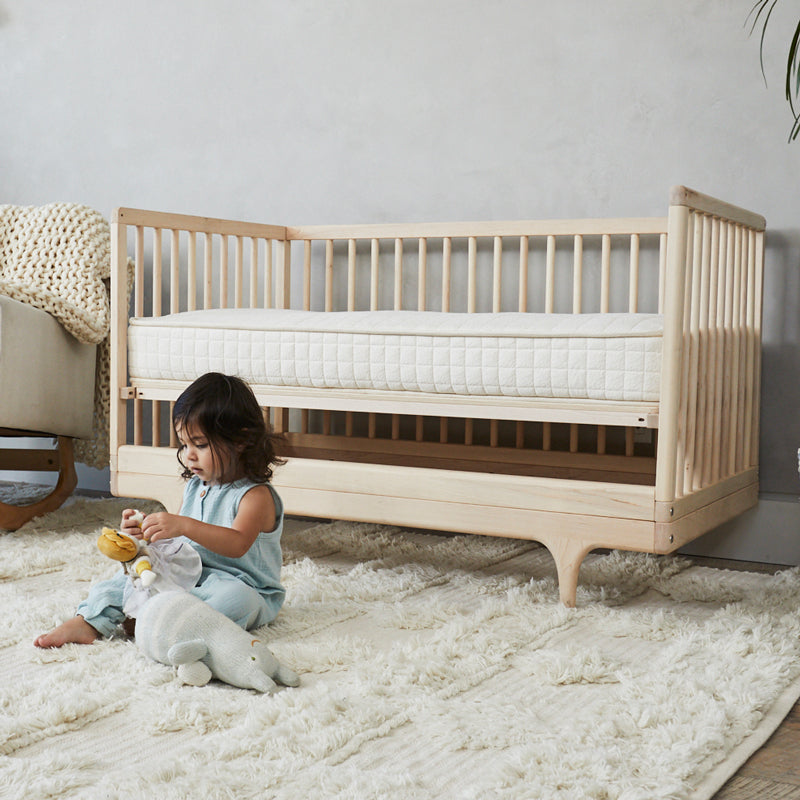
It is handmade in Los Angeles from certified organic latex, wool, cotton, and coconut fiber, with no polyurethane foam, chemical adhesives, vinyl waterproofing, or flame retardants, and a 25-year warranty. The dual-sided design serves the infant stage (firmer, for safe sleep) and the toddler stage. Avocado also partners with Babyletto on an organic collection pairing the mattress with GREENGUARD Gold certified cribs, if you are sourcing both at once.
Healthy Nursery Products: Air Quality and Paint
2. Air Purifiers for the Nursery
A non-toxic nursery is also about the air your little one breathes. New furniture, paint, and flooring can off-gas VOCs for weeks to months, so an air purifier is one of the most practical, eco-friendly investments you can make.
What to look for:
- True HEPA filtration: Captures 99.97% of particles 0.3 microns or larger.
- Activated carbon filter: Captures VOCs and formaldehyde from off-gassing, not just particles.
- No ozone: Avoid ionizers and UV-C systems that produce ozone, a lung irritant.
- Quiet and correctly sized: Under 35 decibels on low, with a CADR matched to your nursery (most are 100 to 200 square feet).
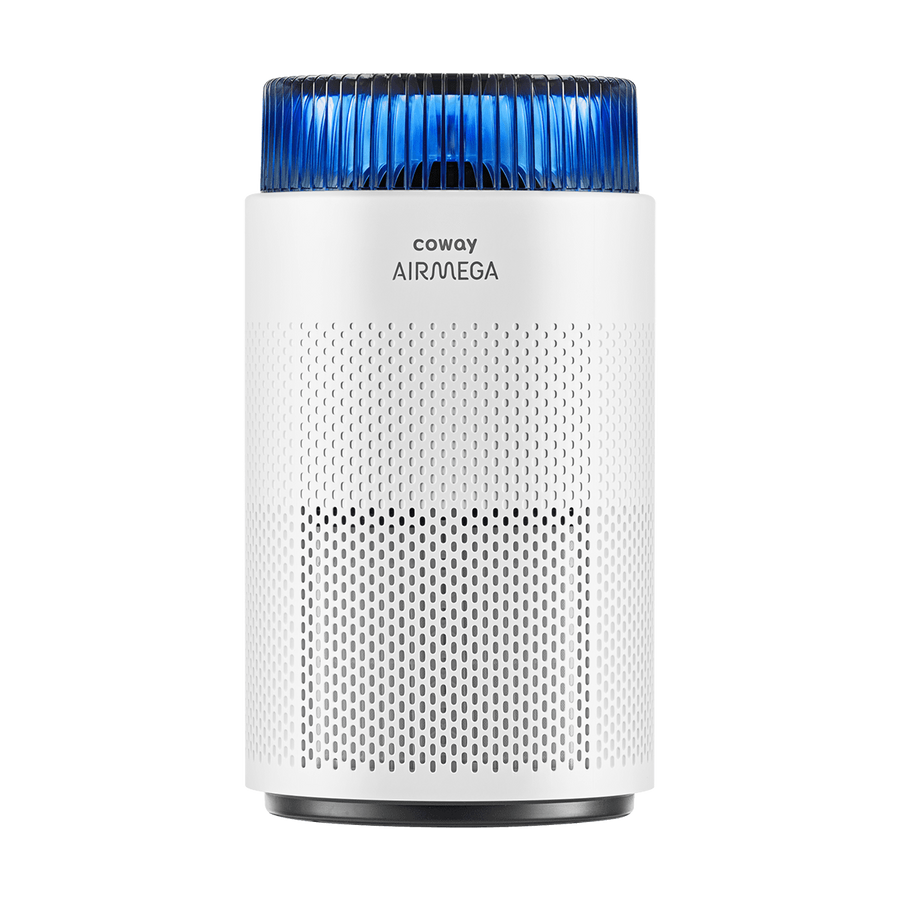
Recommended picks: The Coway Airmega 100 is compact, whisper-quiet, and uses three-stage true HEPA filtration with no ozone. The Coway AP-1512HH covers larger nurseries up to 360 square feet.
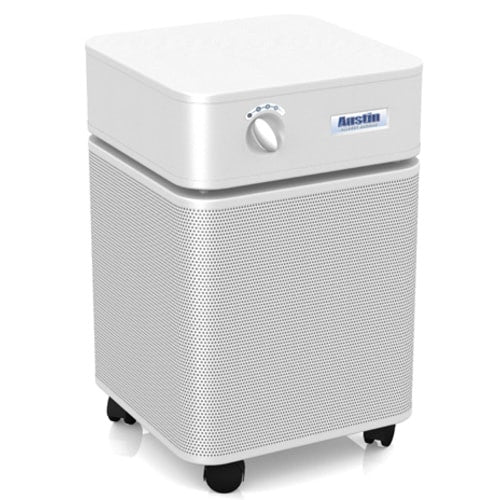
The Austin Air Allergy Machine is a premium pick with a robust carbon filter for VOC-heavy rooms, and the Levoit Core 300S is an affordable, ozone-free option for a standard nursery.
Practical tip: Run it on high for a few hours before your baby sleeps in the room, then drop to a quiet setting overnight, and run it continuously for the first few weeks after new paint or furniture.
3. Zero-VOC Paint
Conventional paint is a major source of VOC exposure in a freshly finished nursery. That "new paint" smell is VOCs off-gassing, and it can continue for weeks after the paint looks dry.
Low-VOC paints contain under 50 grams per liter of VOCs; true zero-VOC paints contain under 5 grams per liter and are the right choice for a nursery. Just as important, confirm the tint colorant is also zero-VOC, since many brands add VOC-containing tints that cancel out the zero-VOC base.
Recommended brands: ECOS Paints (GREENGUARD Gold certified, zero-VOC colorants across the full palette, free from formaldehyde and biocides), Benjamin Moore Natura (zero-VOC through colorants, widely available), and Clare Paint (GREENGUARD Gold certified, clean formula, popular with design-minded parents).
Practical tip: Paint early in your third trimester, ideally 4 to 6 weeks before baby arrives, since even zero-VOC paint benefits from a curing window. Ventilate well and run your air purifier during and after.
Non-Toxic Nursery Furniture, Rockers, and Rugs
4. Nursery Furniture and Rockers: What to Look For
Conventional cribs, dressers, and changing tables made from MDF or particleboard are usually bonded with formaldehyde-containing adhesives and finished with lacquers that off-gas, especially in a warm room.
What to look for in non-toxic nursery furniture:
- Solid wood construction, not MDF or particleboard
- GREENGUARD Gold certification for low emissions
- Water-based, VOC-free finishes
- FSC-certified wood sourcing
Babyletto is the most consistently recommended eco-friendly nursery furniture brand: GREENGUARD Gold certified cribs, dressers, and changing tables in clean, modern designs. Nurseryworks and Oeuf both make solid-wood, low-emission pieces worth a look at a similar price point.
Non-toxic nursery rockers and gliders: You will spend countless hours in the rocker feeding and soothing, so its materials matter. Conventional upholstered gliders often hide flame retardants and stain-resistant PFAS treatments in the foam and fabric. Look for a GREENGUARD Gold certified glider, or CertiPUR-US foam with untreated natural fabric. Babyletto and Nurseryworks offer GREENGUARD Gold certified gliders, and Monte Design labels a flame-retardant-free option. Skip any glider marketed as stain-resistant unless the maker confirms it is PFAS-free.
For play furniture, Figgy makes modular play couches that are genuinely toxin-free and built to last: CertiPUR-US foam made in the USA, GREENGUARD Gold certified fabrics, third-party tested, and a 10-year warranty.

Lovevery is also worth noting for developmentally led, Montessori-inspired play materials made from natural, chemical-tested materials.

5. Rugs, Flooring, and Textiles
Synthetic rugs off-gas VOCs and collect dust, allergens, and chemical residue. Look for natural fibers: wool, cotton, jute, or sisal. Lorena Canals makes machine-washable, natural-fiber rugs that are genuinely practical for a nursery floor, and Hook & Loom offers hand-woven wool and cotton rugs with zero-VOC, chemical-free dyes. Both are far better than a synthetic rug for a baby's space, with undyed or low-impact, OEKO-TEX-aligned finishes.
For bedding and textiles, GOTS-certified organic cotton is the benchmark for crib sheets, swaddles, and sleep sacks, verifying both organic fiber and clean processing (no chlorine bleaching, formaldehyde finishes, or azo dyes). aden + anais, Burt's Bees Baby, and Finn + Emma are well-regarded at various price points. Avoid rugs and furniture with stain-resistant treatments, which often involve PFAS chemistry.
Diapers, Wipes, and Cleaning Products
6. Diapers and Wipes: What Touches Baby's Skin All Day
A newborn goes through 8 to 10 diapers a day, in near-constant contact with some of the most sensitive, absorbent skin on the body. Conventional diapers can contain chlorine-bleached pulp, synthetic fragrances, phthalates, and PFAS waterproofing.
What to look for: TCF (totally chlorine-free) processing, fragrance-free and lotion-free, PFAS-free (independently tested, not just claimed), no dyes or parabens, and OEKO-TEX Standard 100 certification where available.
- Coterie is the most rigorously tested non-toxic disposable diaper available: TCF-processed, tested against nearly 200 chemicals, OEKO-TEX Standard 100 certified, and independently lab-tested as non-detect for PFAS, with no fragrance, dyes, latex, parabens, or phthalates. Their wipes are equally clean.
- Dyper is a strong plant-based, bamboo-viscose alternative (TCF, fragrance-free, OEKO-TEX certified), and HealthyBaby is excellent for families wanting the cleanest possible ingredient profile.
For wipes, choose fragrance-free and alcohol-free, and avoid sodium benzoate. Coterie wipes, HealthyBaby wipes, and Water Wipes (99% purified water) are all reliable for sensitive newborn skin.
7. Cleaning Products: Force of Nature and Branch Basics
A non-toxic nursery can be undone quickly by the products used to clean it. Conventional cleaners often contain synthetic fragrances, quaternary ammonium compounds, and chlorine derivatives that linger on surfaces. In a room where a baby crawls and mouths everything, what you clean with matters as much as what you furnish with.
Force of Nature converts salt, water, and vinegar into hypochlorous acid: an EPA-registered disinfectant that kills 99.9% of bacteria, viruses, mold, and mildew, then breaks back down into saltwater. No fumes, no residue, and so gentle it is used in wound and eye care. The changing table, crib rails, floor, and diaper pail can all be disinfected safely.
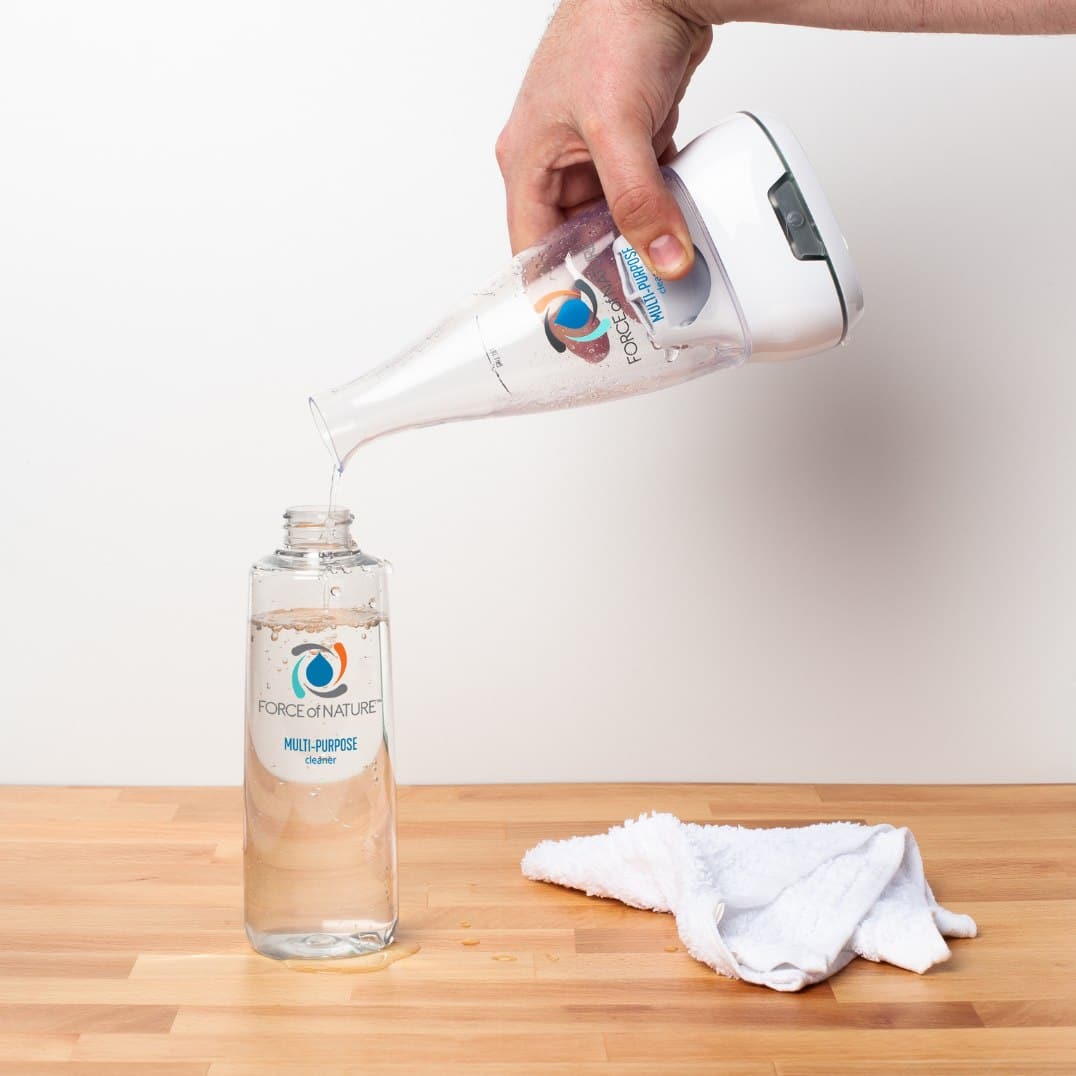
Branch Basics is a single plant-based, fragrance-free concentrate that dilutes into labeled bottles for every job in your home, cutting both chemical load and clutter. It is not an EPA-registered disinfectant, but it is an outstanding everyday cleaner free from synthetic fragrance, SLS, and parabens. Used together, the two make a clean nursery system: Force of Nature for disinfecting, Branch Basics for everything else.
Non-Toxic Baby Products Beyond the Nursery
Once the room itself is handled, a few more categories touch your baby daily. Here are the safe swaps worth adding to your non-toxic baby registry.
8. Non-Toxic Baby Skincare
A newborn's skin is thin and absorbent, so what you put on it matters as much as what they sleep on. Look for short, fragrance-free ingredient lists with no parabens, phthalates, or synthetic dyes. Well-regarded clean brands include Earth Mama Organics, Tubby Todd (popular for eczema-prone skin), and Weleda Baby. A starter kit is really just a gentle wash, a fragrance-free diaper balm, and an unscented lotion.
9. Non-Toxic Baby Feeding Sets
The safest feeding materials are glass and medical-grade silicone, which do not leach the way plastic can. Look for glass bottles (Dr. Brown's, Philips Avent), medical-grade silicone bottles and bowls (Comotomo, Boon, ezpz), and stainless steel cups and plates as baby grows. If you use plastic, choose BPA-free and phthalate-free, and never heat food in it, since heat increases chemical and microplastic shedding.
10. Safe First Foods and Baby Food Brands
When your baby starts solids around six months, heavy metals (lead, arsenic, cadmium) are the main concern, since testing has repeatedly found them in commercial baby foods. Make simple foods at home when you can, and choose brands that publish independent heavy-metal testing, such as Serenity Kids, Once Upon a Farm, and Yumi. Rotate grains away from rice (higher in arsenic) and offer a variety of colorful whole foods.
11. Car Seats and Bigger Gear
The car seat is one piece of gear you cannot skip, and many are treated with chemical flame retardants to meet flammability rules. A growing number of makers now offer flame-retardant-free or naturally flame-resistant (wool-based) models. Nuna and Clek both make car seats without added chemical flame retardants. It is worth looking closely here, since your baby will spend real time in it, often napping.
Your First Days Home: Keeping It Low-Tox and Low-Stress
The nursery is ready and your baby is finally home. The first week is less about doing more and more about keeping things calm and simple:
- Keep the air moving. Run your air purifier and crack a window when weather allows.
- Go fragrance-free everywhere. Skip perfumes and scented lotions on yourself and visitors; a newborn is soothed by your natural scent.
- Air out anything new. If a piece of gear still smells "new," let it off-gas in another room first, and wash new clothing and bedding in fragrance-free detergent before use.
- Skip candles, fresheners, and place monitors wisely. Avoid paraffin candles and plug-in fresheners in the nursery, and keep any WiFi monitor as far from the crib as visibility allows (or choose low-EMF).
- Protect your own rest. A calm, regulated parent is the most important thing in the room. Accept help and let non-essential tasks wait.
You Do Not Have to Create the Perfect Nursery Overnight
If this guide feels like a lot, start with the three categories that carry the highest and most sustained exposure: the crib mattress, the paint, and the cleaning products. Everything else, the organic rug, the eco-friendly furniture, the non-toxic play couch, is worth pursuing as you build, but none of it needs to happen before baby arrives.
The goal is not perfection. It is intentional reduction of the highest-risk exposures in the space where your little one spends the most time. Make the highest-impact swaps first and build from there. Your baby's developing body will benefit from every thoughtful choice you make.
Questions about supporting your baby's health from the inside out? Book a visit with Dr. Kelly at MotherBaby Wellness →
Learn about our pediatric chiropractic care for newborns and babies →
Reviewed by Dr. Kelly – perinatal and pediatric chiropractor, ICPA Webster Certified, and Certified Professional Midwife, serving families in the Twin Cities, MN.
Frequently Asked Questions
What makes a crib mattress truly non-toxic?
A truly non-toxic crib mattress should hold finished-product GOTS certification (not just the raw materials), be free from polyurethane foam, chemical flame retardants, vinyl waterproofing, and PFAS, and carry independent certifications like GREENGUARD Gold and MADE SAFE. The Avocado Organic Crib Mattress holds five such certifications and is the benchmark for the category.
Do I really need an air purifier in the nursery?
For a room with new furniture, fresh paint, or flooring, yes. An air purifier with true HEPA and activated carbon filtration meaningfully reduces VOC exposure and allergens, and babies breathe more air relative to their body weight than adults. Look for an ozone-free model sized to your nursery's square footage.
What is the difference between low-VOC and zero-VOC paint?
Low-VOC paint contains under 50 grams per liter of volatile organic compounds; zero-VOC paint contains under 5 grams per liter and is the right standard for a nursery. Confirm the tint colorant is also zero-VOC, since many brands add VOC-containing tints after the fact. ECOS Paints and Benjamin Moore Natura both keep zero-VOC status through their colorants.
What is the safest rug material for a baby's room?
Natural fibers are safest: wool, cotton, jute, and sisal, which avoid the VOC off-gassing of synthetic rugs. For non-toxic nursery rugs, Lorena Canals (machine-washable) and Hook & Loom (wool and cotton with zero-VOC dyes) are top brands. Avoid any rug with stain-resistant treatment, which often involves PFAS chemistry.
What is the best non-toxic baby skincare?
Look for short, fragrance-free ingredient lists with no parabens, phthalates, or synthetic dyes. Well-regarded clean brands include Earth Mama Organics, Tubby Todd, and Weleda Baby. A newborn really only needs a gentle wash, a fragrance-free diaper balm, and an unscented lotion. Because newborn skin is thin and absorbent, simpler formulas with fewer ingredients are generally the safest choice.
What is the best non-toxic baby feeding set?
Glass and medical-grade silicone are the safest feeding materials, since they do not leach the way plastic can. Glass bottles (Dr. Brown's, Philips Avent), medical-grade silicone bottles and bowls (Comotomo, Boon, ezpz), and stainless steel plates and cups are all good choices. If you use plastic, choose BPA-free and phthalate-free, and never heat food in it, since heat increases chemical and microplastic shedding.
Which baby food brands test for heavy metals?
Heavy metals like lead, arsenic, and cadmium are the main concern with commercial baby food. Making simple foods at home when you can is ideal, and among store brands, Serenity Kids, Once Upon a Farm, and Yumi publish independent heavy-metal testing. Rotate grains away from rice (which is higher in arsenic) and offer a wide variety of colorful whole foods.
Are non-toxic nursery rockers worth it?
Yes. You will spend hundreds of hours in the rocker, and conventional gliders often contain flame retardants and PFAS stain treatments in the foam and fabric. Look for a GREENGUARD Gold certified glider or CertiPUR-US foam with untreated natural fabric. Babyletto, Nurseryworks, and Monte Design all offer low-emission options, some flame-retardant-free.
Can I use Force of Nature around a newborn?
Yes. Force of Nature produces hypochlorous acid, an EPA-registered disinfectant so gentle it is used in wound and eye care. It leaves no toxic residue and breaks down into saltwater. It is one of the few cleaning products genuinely appropriate for all nursery surfaces, including the changing table, crib rails, and the floor where baby plays.